 Ocala Irrigation Repair
 Sprinkler Head Replacement in Ocala
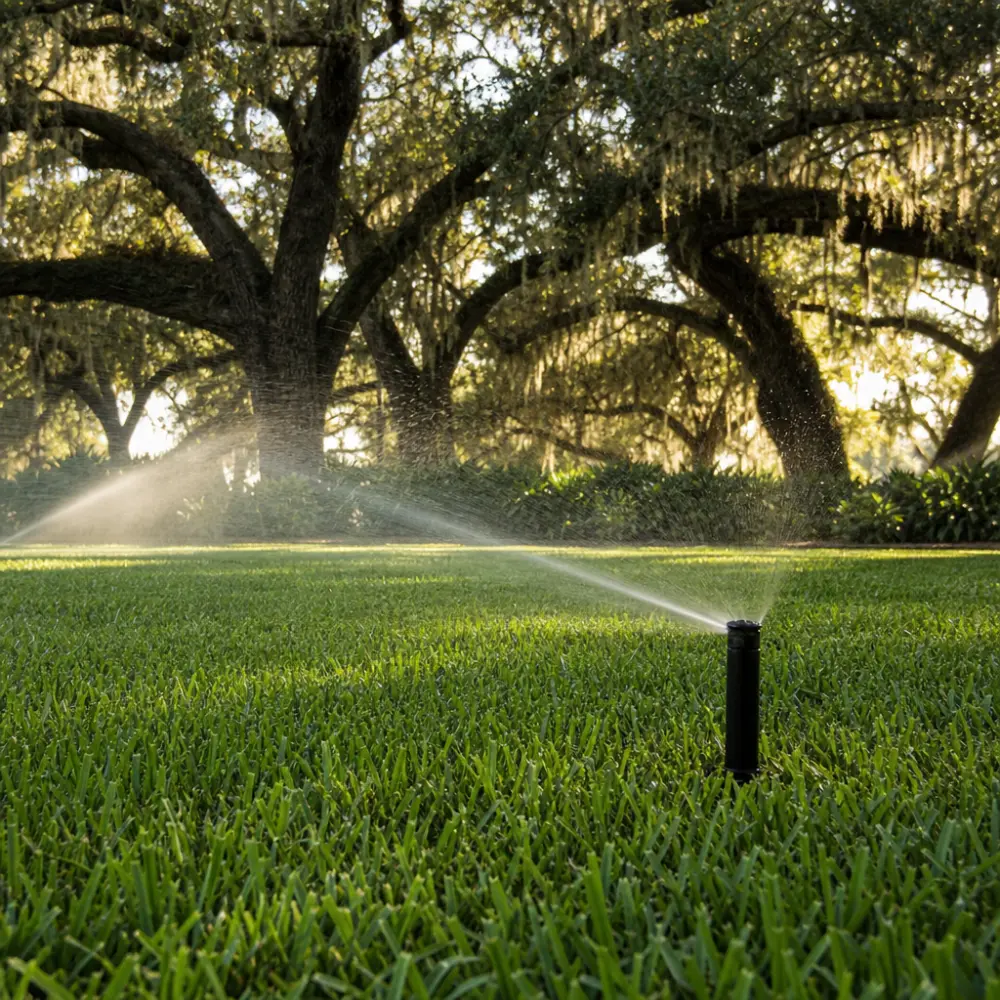
A sprinkler head is the part of the system doing the actual watering, and it’s also the part that takes the most physical abuse: mower blades, foot traffic, settling soil, and simple age. Head replacement runs $15 to $50 per head installed, and because most calls involve more than one bad head at a time, a typical full visit runs $100 to $250, covering the diagnostic visit and however many heads need attention.
What we check and replace
- Geysering or spraying straight up: almost always a cracked riser or a popped internal seal, sometimes made worse by pressure that’s too high for the zone.
- Sunken heads: a head that’s settled below grade gets buried in dirt or grass and stops distributing water evenly; we check whether it can be reset and leveled before replacing it outright.
- Broken or missing heads: mower strikes, foot traffic, and vehicle contact are the most common causes; a broken head left unaddressed both wastes water and creates a standing puddle that draws mosquitoes.
- Wrong nozzle for the zone: a head with a nozzle throwing too far, too short, or in the wrong arc leaves dry patches or overspray even when the head itself is mechanically fine; see zone coverage fix and adjustment for repairs that don’t need a new head at all.
- Mismatched head types on one zone: spray heads and rotor heads apply water at very different rates; mixing them on the same zone causes some areas to get soaked while others stay dry, even with every head working perfectly.
Why this is usually the cheapest real fix on the list
A head is a small, simple, mechanical part, and it’s almost never worth diagnosing around. If a zone has dry patches or one wet spot, checking the heads first is the fast, low-cost move before assuming a valve or line problem. Most head replacements finish in minutes once the tech is on site, which is why a visit covering several heads at once costs so much less per head than a single-head emergency call would.
What it costs
| Job | Typical range |
|---|---|
| Diagnostic visit | $75 to $150 |
| Single head, replaced and adjusted | $15 to $50 installed |
| Typical visit (several heads, one trip) | $100 to $250 total |
| Head reset/leveling, no new part needed | Usually the low end of the zone coverage fix range, see pricing |
Same rule as everything on our pricing page: the tech checks and quotes before replacing anything.
What to check yourself first
Before calling, run the zone (respecting your current watering-day window) and look for the obvious signs: a head spraying straight up instead of in a pattern, a head sitting visibly higher or lower than the grass line around it, or a head that simply isn’t popping up at all when the zone runs. A photo or short video of the zone running helps the tech come prepared with the right part on the truck.
The Marion County context
Marion County’s sandy soil and periods of heavy seasonal rain both put real stress on heads over time: soil settles unevenly after rain, and a head sitting slightly proud of the surface is an easy mower target. On a one-day-a-week watering schedule, a broken head matters more than it would somewhere with looser rules, because a zone with bad coverage only gets one shot a week to make up for it. Getting heads fixed promptly, rather than living with a geysering head for a few weeks, is the cheapest way to protect the rest of your watering allowance for actual coverage instead of a puddle.
Rotor heads vs. spray heads: why it matters which one fails
Most residential systems in Marion County mix two head types on different zones. Spray heads pop up a couple of inches and throw a fixed fan pattern a short distance, usually 4 to 15 feet, and are common on smaller turf zones and beds. Rotor heads pop up higher, rotate a stream back and forth, and throw much farther, 15 to 45 feet or more, which is why they’re used on larger open lawn areas. A failed rotor is a bigger problem to leave alone than a failed spray head, because it’s covering more square footage per unit, and a stuck or broken rotor often leaves an obvious dry ring at the edge of its throw within a week on a one-day-a-week schedule.
When we replace a head, we replace it with the correct type for that zone, not just whatever’s on the truck, because putting a spray head where a rotor belongs (or the reverse) creates a coverage mismatch that looks like a new problem a month later.
How a head-replacement visit works
1. You tell us what you’ve noticed: a geyser, a dry patch, or a head that visibly isn’t popping up.
2. We run every zone, not just the one you flagged, since a second bad head is common enough that it’s worth checking while the truck is already there.
3. We identify head type, size, and nozzle for anything that needs replacing, matching brand where practical so the zone’s coverage pattern stays consistent.
4. We replace, re-level, and re-aim, then run the zone again with you watching, so you can see the new coverage before we leave.
5. We check pressure at the same time. A single head geysering can be a symptom of a zone running at higher pressure than it should, and catching that now prevents the same failure on the next head down the line.
Where we work
On site across Ocala, Belleview, Dunnellon, Silver Springs Shores, Summerfield, On Top of the World, Marion Oaks, and Reddick. If you’re not sure whether a head, a valve, or a line is the actual problem, the dry or brown patches and low pressure problem pages walk through the checks, and the irrigation repair cost calculator turns your symptom into a specific estimate.
Frequently Asked Questions
How much does it cost to replace a sprinkler head?
$15 to $50 per head installed, depending on the head type and how easy it is to reach. A typical visit covering several heads on one trip runs $100 to $250 total, since the diagnostic visit and travel are shared across all of them.
My head is spraying straight up like a geyser. Is that just a broken head?
Usually, yes: a cracked riser, a popped seal, or a head that's been run over or knocked loose. Occasionally a geysering head is a symptom of pressure that's too high for the zone, which the tech checks for at the same visit so it doesn't happen again with the new head.
Do you match the exact head I already have?
Where possible, yes, matching brand and nozzle type keeps the zone's coverage pattern consistent. Where an exact match isn't available, we install a compatible equivalent and re-adjust the arc and throw to match the original coverage.
Can a sunken head be raised instead of replaced?
Sometimes. A head that's settled into the soil but is otherwise intact can often be reset and leveled rather than replaced outright, which is cheaper. The tech checks this before defaulting to a new head.
More irrigation services
- Irrigation Repair in Ocala and Marion County
- Irrigation Valve Repair in Ocala
- Sprinkler Timer & Controller Repair in Ocala
- Broken Line & Leak Repair in Ocala
- Rain Sensor Installation in Ocala
- Zone Coverage Fix & Adjustment in Ocala
- Drip Irrigation in Ocala
- Irrigation Pump & Well-System Troubleshooting in Ocala
Areas we serve
- Ocala, FL
- Irrigation Repair in Belleview, Florida
- Irrigation Repair in Dunnellon, Florida
- Irrigation Repair in Marion Oaks, Florida
- Irrigation Repair in On Top of the World, Florida
- Irrigation Repair in Reddick, Florida
- Irrigation Repair in Silver Springs Shores, Florida
- Irrigation Repair in Summerfield, Florida